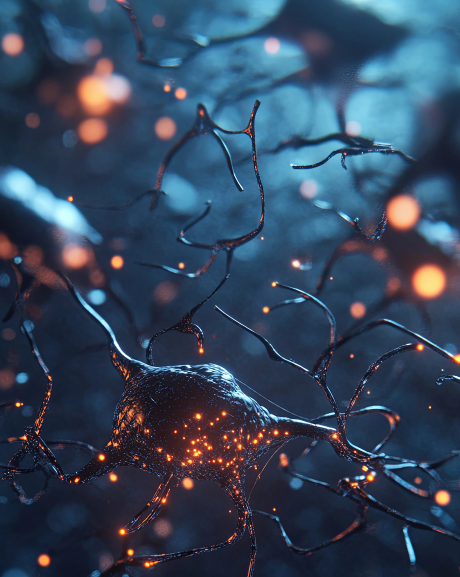
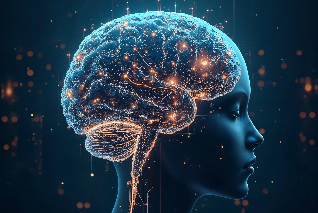
The Neurosci-ANN’s project develops a novel framework for improving the interpretability of artificial neural networks by combining methodologies from computational neuroscience and explainable artificial intelligence. Its central objective is to characterise how information is represented and processed within deep learning models, and how these internal representations give rise to their observed outputs.
A key goal is to extend the state of the art in interpretability by revealing how activations of collections of artificial neurons in hidden layers are directly associated with the decision-making processes of modern AI systems.
Methods
The project adopts a population-level perspective, focusing on groups of artificial neurons rather than individual units. To achieve this, it develops complementary analytical tools based on the geometry of neural representations.
Decoding approaches are used to characterise how inputs are organised within neural activity spaces, while encoding approaches describe how neurons respond to different stimuli and interact functionally. Together, these methods make it possible to identify how information is structured, how groups of neurons cooperate, and how these interactions lead to specific outputs.
Models and Training
These methods are applied to a range of deep learning architectures, including multilayer perceptrons, convolutional neural networks, and transformer-based models. The project also investigates how internal representations evolve during training, providing insight into the role of architectural design choices and training strategies in shaping learned representations.
Artificial and Biological Comparison
A second major component of the project is the comparison between artificial and biological neural systems. By applying the same analytical framework to large-scale datasets of biological neural activity, the project aims to identify common principles of information encoding and organisation across both domains.
This comparative approach contributes both to the development of biologically inspired AI models and to a deeper understanding of neural computation.
Expected Outcomes
The outcomes of the project include new methods for interpreting deep neural networks, as well as software tools and open resources to support further research. Results are disseminated through scientific publications, conference presentations, and open-source repositories.
News&Events
Category 3
12 May 2026
A vision for a just and equitable transition-3
The transition to a decarbonized global economy is not just about technology and policies — it’s about people, communities, and ensuring…
Category 2
12 May 2026
A vision for a just and equitable transition-2
The transition to a decarbonized global economy is not just about technology and policies — it’s about people, communities, and ensuring…
Category 1
12 May 2026
A vision for a just and equitable transition
The transition to a decarbonized global economy is not just about technology and policies — it’s about people, communities, and ensuring…
Funded by the European Union under the Horizon Europe research and innovation programme.
This project has received funding from the European Union’s Horizon Europe research and innovation programme under the Marie Skłodowska-Curie grant agreement No 211063187
We use both our own and third-party cookies to enhance our services and to offer you the content that most suits your preferences by analysing your browsing habits. Your continued use of the site means that you accept these cookies. You may change your settings and obtain more information here. Accept